IMPORTANT: This article updates the May 2026 regulations. Some of the restrictions described have changed since then.
What has changed?
There is hardly any distinction left between Open Zones and Restricted Zones.
The previous distinction between open and restricted zones no longer applies when determining whether training is required. Flying is now permitted in both zone types without prior training. The requirement to obtain an operating permit through an approved training provider by May 2028 is therefore obsolete.
Registration is mandatory for all flights via the UAS Portal app.
All flights must still be registered via the UAS Portal app, regardless of the zone in which they are flown:
- In open zones, permission is granted immediately.
- In restricted zones (marked blue or yellow), the permit process takes at least 3 days. Please plan accordingly in advance.
The basic requirements remain the same: NBTC approval, liability insurance, CAAT pilot license with drone ID and an active account in the UAS Portal App.
Don’t want to deal with all the permits? Neither before nor during your well-deserved vacation? Then let us take care of registering your drone.
Click here for the registration service .
Flight ban lifted in Pattaya
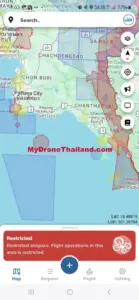
The previous flight ban over Pattaya has been lifted. Drone flights are now permitted there under the generally applicable conditions and after prior registration via the UAS Portal app.
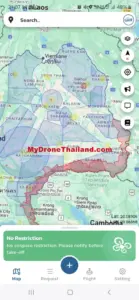
Exclusion zones along the Cambodian border remain in place.
Restricted zones remain in place along the border with Cambodia. Flights in these areas are prohibited. Check the current zone maps in the UAS Portal app before planning flights near the border.
What remains unchanged?
The general conditions from the May update still apply:
• Flight time between 6 a.m. and 6 p.m.
• Maximum flight altitude 90 meters
• Flight within visual line of sight
• No BVLOS flights without special permission
• Minimum distance of 30 meters to people, vehicles, and buildings
• In national parks, a parking permit is also required
Recommendation
Register every flight in a timely manner, especially in restricted zones where processing time is at least 3 days. Check the zone map in the UAS Portal app before each flight, as classifications are subject to change.
What do you need to do if you want to legally fly your drone in Thailand?
Basically, you need:
We’re happy to help you fly your drone legally: Register your drone in Thailand. We’ll take care of it – you enjoy Thailand.
- NBTC
- Insurance
- CAAT (pilot license and drone ID)
- UAS PortalApp
Flying drones in national parks
If you want to fly a drone in a national park, you also need a permit from the national park. You can find all the information in the article ” Drones in National Parks” .
Please note:
- The drone permits from NBTC and CAAT are prerequisites for the national park’s permission.
- The national park’s permission is an important document that must be shown to the park officials to prove that the flight has been authorized.
- Permission for national parks can only be applied for after registration with NBTC and CAAT has been completed.
UAS Portal App – Registering Your Flights
Using the UAS Portal App has been mandatory in Thailand since August 2025. To be honest, it does add an extra step and can be a bit inconvenient.
So what does that mean in practice?
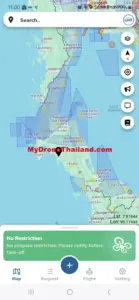
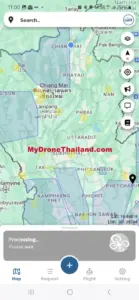
There are two types of zones: open zones and restricted zones.
Open zones (not marked in blue)
In these areas you must register each flight in the app, but approval usually comes within minutes. You define the flight area and upload a few documents, such as your pilot license. If everything is correct and complies with the regulations (for example maximum altitude and visual line of sight), the permission will appear directly in the app.
Then you only need to tap once when starting the flight and once when ending it.
Restricted zones (marked in blue)
These are training areas of the Royal Thai Air Force (RTAF). For flights on weekdays, permission must be requested in advance from the Wing Commander. Approval typically takes 3–7 working days.
Overview of restricted zones